Monday, March 09, 2015

the ochlophobist: returning. again.

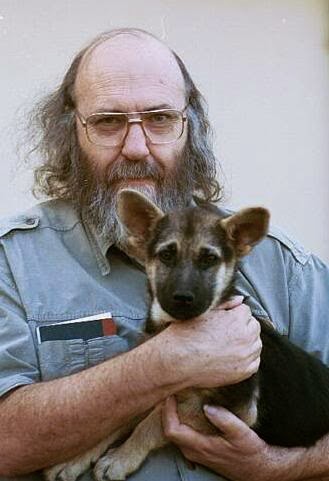
the ochlophobist: returning. again.: I am returning to the Orthodox Church.

I hereby recant my rejection of Orthodox dogma. I ask forgiveness for my ridicule of certain Orthodox beliefs - particularly concerning the energy/essence distinction and uncreated light. I also ask forgiveness for my ridicule of some Orthodox saints (particularly those I assigned to seats in hell), the Athonite tradition, the entirety of the elder tradition, and some of the basic components of Orthodox piety. I was also wrong to laud the Soviet annihilation of nearly all of the Russian Church, and to downplay the horror of their killing of many thousands of believers, and to justify the killing of children in a basement in Yekaterinburg. I also beg forgiveness to those many souls I mocked for their faith and the accouterments of faith that are dear to them. I have never embodied the calling that Fr. Matthew speaks of above. It is my endeavor now to do so.

Saturday, March 07, 2015

Get to Know Robocopy for More Powerful File Management

Get to Know Robocopy for More Powerful File Management: Robocopy (the name is short for Robust File Copy) was introduced with the Windows Server 2003 Resource Kit and is included in all editions of Windows 7. Its many strengths include the ability to copy all NTFS file attributes and to mirror the contents of an entire folder hierarchy across local volumes or over a network. If you use the right combination of options, you can recover from interruptions such as network outages by resuming a copy operation from the point of failure after the connection is restored.

Wednesday, February 25, 2015

falkenbergs folly: Avoiding the retirement blues

falkenbergs folly: Avoiding the retirement blues: I always thought that a beautiful environment such as Greyton (where I am lucky to live) usually enhances one’s happiness. But now I’m not so sure. Recently someone mentioned that, in her opinion, Greyton has an unnervingly high number of depressed people, many who have struggled to adjust to retirement. I would never have thought so, but then I don’t belong to any of the informal networks that gather and distribute such information.

The Myth That Everyone Naturally Prefers Trains to Buses - CityLab

The Myth That Everyone Naturally Prefers Trains to Buses - CityLab: there's no reason to suspect these two rides—modern BRT or modern light rail—would be noticeably different experiences. And yet when transport scholars David Hensher and Corinne Mulley of the University of Sydney Business School showed these images to about 1,370 people in six Australian capital cities, the difference in preference was enormous.

Tuesday, February 10, 2015

Famous Writers on the Creative Benefits of Keeping a Diary | Brain Pickings

Famous Writers on the Creative Benefits of Keeping a Diary | Brain Pickings

The great internet swindle: ever get the feeling you've been cheated? | Technology | The Guardian

The great internet swindle: ever get the feeling you've been cheated? | Technology | The Guardian: During every minute of every day of 2014, according to Andrew Keen’s new book, the world’s internet users – all three billion of them – sent 204m emails, uploaded 72 hours of YouTube video, undertook 4m Google searches, shared 2.46m pieces of Facebook content, published 277,000 tweets, posted 216,000 new photos on Instagram and spent $83,000 on Amazon.

By any measure, for a network that has existed recognisably for barely 20 years (the first graphical web browser, Mosaic, was released in 1993), those are astonishing numbers: the internet, plainly, has transformed all our lives, making so much of what we do every day – communicating, shopping, finding, watching, booking – unimaginably easier than it was. A Pew survey in the United States found last year that 90% of Americans believed the internet had been good for them

Monday, February 09, 2015

Uruguay's Jose Mujica Was Liberal's Dream, But Too Good to Be True | The New Republic

Uruguay's José Mujica Was Liberal's Dream, But Too Good to Be True | The New Republic:

There’s something wrong with the way we respond to figures like Mujica. We place our faith in them—fall in love with them—for what they say and the incorporeal impact they have on our national consciousness. But then, not only do we judge their performance on entirely different metrics, we also stop listening to them. Inspirational leaders issue a call to us, not a promise for us. They invite us to see ourselves differently, to open ourselves to a new way of being. If, after casting our ballots, we don’t buy books instead of new cell phones, don’t use less gas, don’t do more to stitch back together the social fabric of our own neighborhoods—if, rather than answer the call, we retreat safely back to our old cynicism—then whose fault is that?

Wednesday, February 04, 2015

The Shepherding Movement ::: Subversive Influence

� The Shepherding Movement ::: Subversive Influence:

In the early 1970s, four well-known charismatic leaders responded to a moral failure among charismatics in south Florida. Bob Mumford, Derek Prince, Don Basham, and Charles Simpson felt a need for personal accountability and covenanted together for this purpose, submitting their lives and ministries to one another. Ern Baxter, who had ministered with William Branham, was later added to the group and they became known as the “Ft. Lauderdale Five.” They formed Christian Growth Ministries in 1974, and in the movement that they began, the accountability they shared became an emphasis that all believers should submit to a “shepherd” in order to be discipled in the Christian life. Their prominence helped gain wide acceptance for their teaching, which included what was felt to be correctives to the charismatic movement at the time. Other charismatic leaders began submitting to the authority of the Ft. Lauderdale Five in what was known as “covenant relationships.”

Thursday, January 29, 2015

That Time Badass Feminist Queen Elizabeth II Gave Saudi Arabia's King a Lesson in Power | Mother Jones

That Time Badass Feminist Queen Elizabeth II Gave Saudi Arabia's King a Lesson in Power | Mother Jones: Great Britain's Queen Elizabeth II is known to have a wicked sense of humor, and some mean driving skills. One day back in 1998, she deployed both spectacularly to punk Saudi Arabia's late King Abdullah bin Abdulaziz. Back then, Abdullah was a Saudi crown prince visiting Balmoral, the vast royal estate in Scotland. The Queen had offered him a tour of the grounds—here's what happened next, according to former British ambassador to Saudi Arabia Sir Sherard Cowper-Coles:

The royal Land Rovers were drawn up in front of the castle. As instructed, the Crown Prince climbed into the front seat of the Land Rover, with his interpreter in the seat behind. To his surprise, the Queen climbed into the driving seat, turned the ignition and drove off. Women are not—yet—allowed to drive in Saudi Arabia, and Abdullah was not used to being driven by a woman, let alone a queen. His nervousness only increased as the queen, an Army driver in wartime, accelerated the Land Rover along the narrow Scottish estate roads, talking all the time. Through his interpreter, the Crown Prince implored the Queen to slow down and concentrate on the road ahead.

Sunday, January 25, 2015

Chomsky: Paris attacks show hypocrisy of West s outrage - CNN.com

Chomsky: Paris attacks show hypocrisy of West s outrage - CNN.com:


NATO and American officials defended the attack, Erlanger reported, as an effort to undermine the regime of President Slobodan Milosevic of Yugoslavia. Pentagon spokesman Kenneth Bacon told a briefing in Washington that Serb TV is as much a part of Milosevic s murder machine as his military is, hence a legitimate target of attack. There were no demonstrations or cries of outrage, no chants of We are RTV, no inquiries into the roots of the attack in Christian culture and history. On the contrary, the attack on the press was lauded. The highly regarded U.S. diplomat Richard Holbrooke, then envoy to Yugoslavia, described the successful attack on RTV as an enormously important and, I think, positive development, a sentiment echoed by others.

vintage everyday: Rare and Unseen Color Photographs of America’s Hippie Communes from the 1970s

vintage everyday: Rare and Unseen Color Photographs of America’s Hippie Communes from the 1970s: Their hair and dress, their pioneer spirit, even their Indian teepees evoke the nation’s frontier beginnings. These young people are members of a commune, which they have created for themselves as a new and radical way of living. Scores of these communes are springing up all across the U.S. In the wilderness areas of the West, Southwest, and New England, the new settlers build their own homes–adobe huts, log cabins, geodesic domes–share their money and labor and legislate their own laws and taboos.


https://blogger.googleusercontent.com/img/b/R29vZ2xl/AVvXsEjUACuTWducj9oIjsc8M0F2Db58RePf73aR-HkL_G7Bu_d1rdZStuDdzc1-dKmq9jsQQf8jrCoZp0GBC7WdEp_yTmsw4ess58wdFBUM70u1c14FhlpkTU0uhwqopVZ-Rbo0D65d/s1600/America%E2%80%99s+1970s+Hippie+Communes+(4).jpg

14 African Countries Forced by France to Pay Colonial Tax For the Benefits of Slavery and Colonization | SiliconAfrica.com

14 African Countries Forced by France to Pay Colonial Tax For the Benefits of Slavery and Colonization | SiliconAfrica.com:

When S�kou Tour�of Guinea decided in 1958 to get out of french colonial empire, and opted for the country independence, the french colonial elite in Paris got so furious, and in a historic act of fury the french administration in Guinea destroyed everything in the country which represented what they called the benefits from french colonization.

Three thousand French left the country, taking all their property and destroying anything that which could not be moved: schools, nurseries, public administration buildings were crumbled; cars, books, medicine, research institute instruments, tractors were crushed and sabotaged; horses, cows in the farms were killed, and food in warehouses were burned or poisoned.

Thursday, January 15, 2015

Are All Terrorists Muslims? It’s Not Even Close - The Daily Beast

Are All Terrorists Muslims? It’s Not Even Close - The Daily Beast:

here are some statistics for those interested. Let’s start with Europe. Want to guess what percent of the terrorist attacks there were committed by Muslims over the past five years? Wrong. That is, unless you said less than 2 percent.

As Europol, the European Union’s law-enforcement agency, noted in its report released last year, the vast majority of terror attacks in Europe were perpetrated by separatist groups. For example, in 2013, there were 152 terror attacks in Europe. Only two of them were “religiously motivated,” while 84 were predicated upon ethno-nationalist or separatist beliefs.

Saturday, January 10, 2015

Teen Bryce Masters In Critical Condition After Police Use Taser On Him: Report

Teen Bryce Masters In Critical Condition After Police Use Taser On Him: Report:


Cellphone video still from the scene. (Photo: Fox4kc.com)

Witnesses to a police stop in Missouri say cops used excessive force when they used a Taser on a 17-year-old boy who is now reportedly in critical condition.

"You could tell the kid was going into convulsions," witness Michelle Baker told Fox4kc.com. "[The cop] turned him over and his head was dangling ... and he had blood coming out."

The teenager has been identified by Kctv5.com as Bryce Masters of Independence.

Friday, January 09, 2015

Serb TV station was legitimate target, says Blair | World news | theguardian.com

Serb TV station was legitimate target, says Blair | World news | theguardian.com: Nato leaders yesterday scrambled to justify the bombing of Serbia's state television station in an attack which killed a number of civilian workers and marked a further widening in the scope of targets now considered legitimate.

The attack on the building in the centre of Belgrade - which contradicted an apparent assurance by Nato this month that only transmitters would be hit - was condemned by international journalists' organisations, representing both employers and unions.

Thursday, January 08, 2015

What a Shaman Sees in A Mental Hospital | Earth. We are one.

What a Shaman Sees in A Mental Hospital | Earth. We are one.:


What those in the West view as mental illness, the Dagara people regard as “good news from the other world.” The person going through the crisis has been chosen as a medium for a message to the community that needs to be communicated from the spirit realm. “Mental disorder, behavioral disorder of all kinds, signal the fact that two obviously incompatible energies have merged into the same field,” says Dr. Som�. These disturbances result when the person does not get assistance in dealing with the presence of the energy from the spirit realm.

The 160-Year Christian History Behind What's Happening in Ukraine | Christianity Today

The 160-Year Christian History Behind What's Happening in Ukraine | Christianity Today:

In recent days, the Crimean peninsula has been at the heart of what some have described as the greatest international crisis of the 21st century. But this is not the first time the region has been so critical to international affairs. Many educated people have at least heard of the great struggle known as the Crimean War (1853-56), although its causes and events remain mysterious to most non-specialists.

Tuesday, January 06, 2015

Morehead's Musings: IBMR explores "Witchcraft and Mission Studies"

Morehead's Musings: IBMR explores "Witchcraft and Mission Studies":


The January 2015 issue of the International Bulletin of Missionary Research explores the topic of "Witchcraft and Mission Studies."Essays exploring this topic include:


  • "Putting Witch Accusations on the Missiological Agenda: A Case from Northern Peru by Robert J. Priest 
  • "Beyond the Fence: Confronting Witchcraft Accusations in the Papua New Guinea Highlands" by Philip Gibbs 
  • "Healing Communities: Contextualizing Responses to Witch Accusations" by Steven D. H. Rasmussen, with Hannah Rasmussen 
  • "Toward a Christian Response to Witchcraft in Northern Ghana"by Jon P. Kirby
  • "Witchcraft Accusations and Christianity in Africa" by J. Kwabena Asamoah-Gyadu